About ASRU
The Astral Survey Research Union is an independent, volunteer-run research union based in Portland, Oregon. Its members build open machine-learning tools for astronomical images.
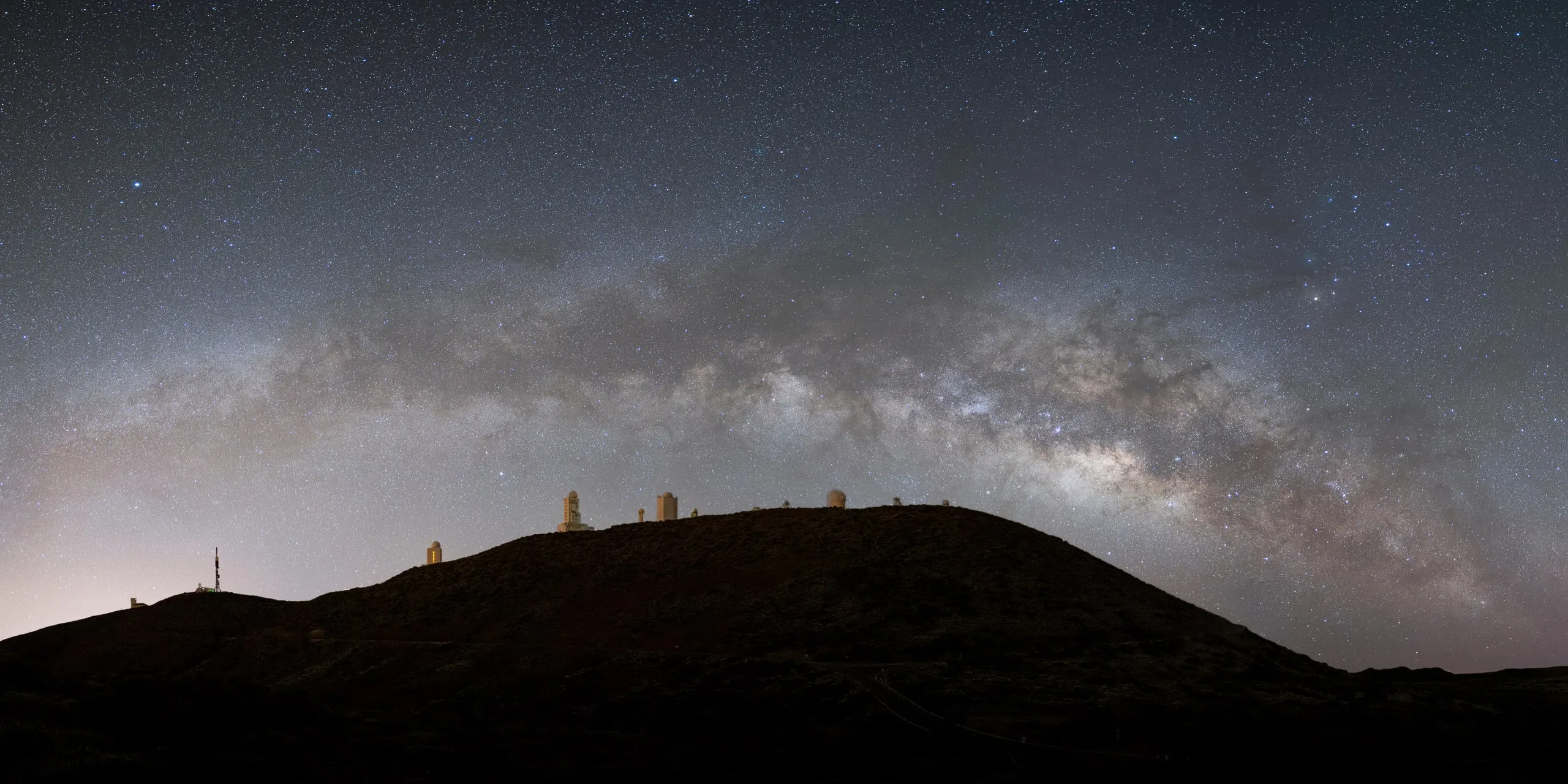
The Milky Way over the Teide Observatory, Tenerife. Image: Curd-Christian Tengeler/IAU OAE, CC BY 4.0

Our purpose
Astronomy has produced an enormous public record of the sky, from glass plates exposed more than a century ago to the images that amateur astronomers take every clear night. Much of it has only ever been looked at once, for one purpose.
ASRU exists to help people look at these images again, more carefully. We develop open computational methods, including machine learning, to find, measure and classify what is in astronomical images. We publish everything we make, explain how it was made, and report honestly where it fails.
We also want to make this kind of work open to people who are not professional astronomers. Most of our members are not. They are students, engineers, teachers and amateur observers who like the sky and are good at something useful.
How the Union is organized
ASRU is governed by its bylaws, which the members adopted at the Founding Assembly on November 7, 2026. The General Assembly of all members is the highest decision-making body and meets at least once a year. Between assemblies the Union is run by an elected Council of 5, four of whom live in Portland. Each research program is led by a Council member; the other members take part in whatever interests them, in their spare time.
Members who live nearby meet every other week in Portland, and everyone else joins by video call. ASRU has no paid staff and no office. Members pay their own way to events, and the Union’s small running costs are covered by voluntary contributions from members.
Independence
ASRU is not affiliated with any university, observatory or government agency. When this site mentions other organizations, it is to credit public data or images we use, or to describe places we have visited. None of them endorses ASRU or its work.
One Council member, Mareike Schulte, works on professional astronomy projects in Germany. She supports ASRU in a personal capacity, with technical advice and help finding professional tools and public data. ASRU has no agreement with her employer.
Our first year
-
An open call
Sirio Vega Luna posts an open call in Portland and in online astronomy forums for volunteers to help apply machine learning to public sky images. Two people reply in the first week.
-
Working groups
With eight members, seven of them in the Portland area, the group splits into three working groups: historical plates, member images and software.
-
Plate Archive Project begins
Members start applying classification models to digitized photographic plates released by Harvard’s DASCH project.
-
First expedition: Island of Hawaiʻi
Five members spend a week on the Island of Hawaiʻi, including a sunset visit to the summit of Maunakea.
-
trailmask v0.1
ASRU releases its first open-source model, which finds satellite trails in wide-field images.
-
Draft bylaws
A first draft of the bylaws is shared with members for a ten-week comment period.
-
Totality in Spain, then La Palma
Five members watch the total solar eclipse of August 12 from northern Spain, then spend four nights imaging on La Palma.
-
Founding Assembly
All twelve members adopt the bylaws and elect the first Council. ASRU is formally founded.
From the founder
I started ASRU because I had spent a summer running public sky images through new software and kept running into ordinary problems: dust measured as stars, satellite trails counted as objects, calibration steps that nobody had written down. None of it was dramatic. Together it suggested that there was a lot of patient, useful work to do, and that it did not need a big institution to do it.
A year later we are twelve people, most of us a short bus ride from each other, with three programs, three technical notes, two expeditions and a set of rules we wrote together. I am proud of all of it, and most proud that every piece of it is public.
Sirio Vega Luna, President, November 2026