Why Hawaiʻi
When we started planning our first trip together, three things mattered: a dark sky, a date close to new Moon, and a place we could reach from Portland without spending too much. Theo grew up in Hilo, on the east side of the island, and offered to organize. The Island of Hawaiʻi has some of the darkest inhabited areas in the United States, and at about 19 degrees north it shows a good part of the southern sky as well as the northern one.
We chose the week of the new Moon on March 19, 2026.
Where we observed
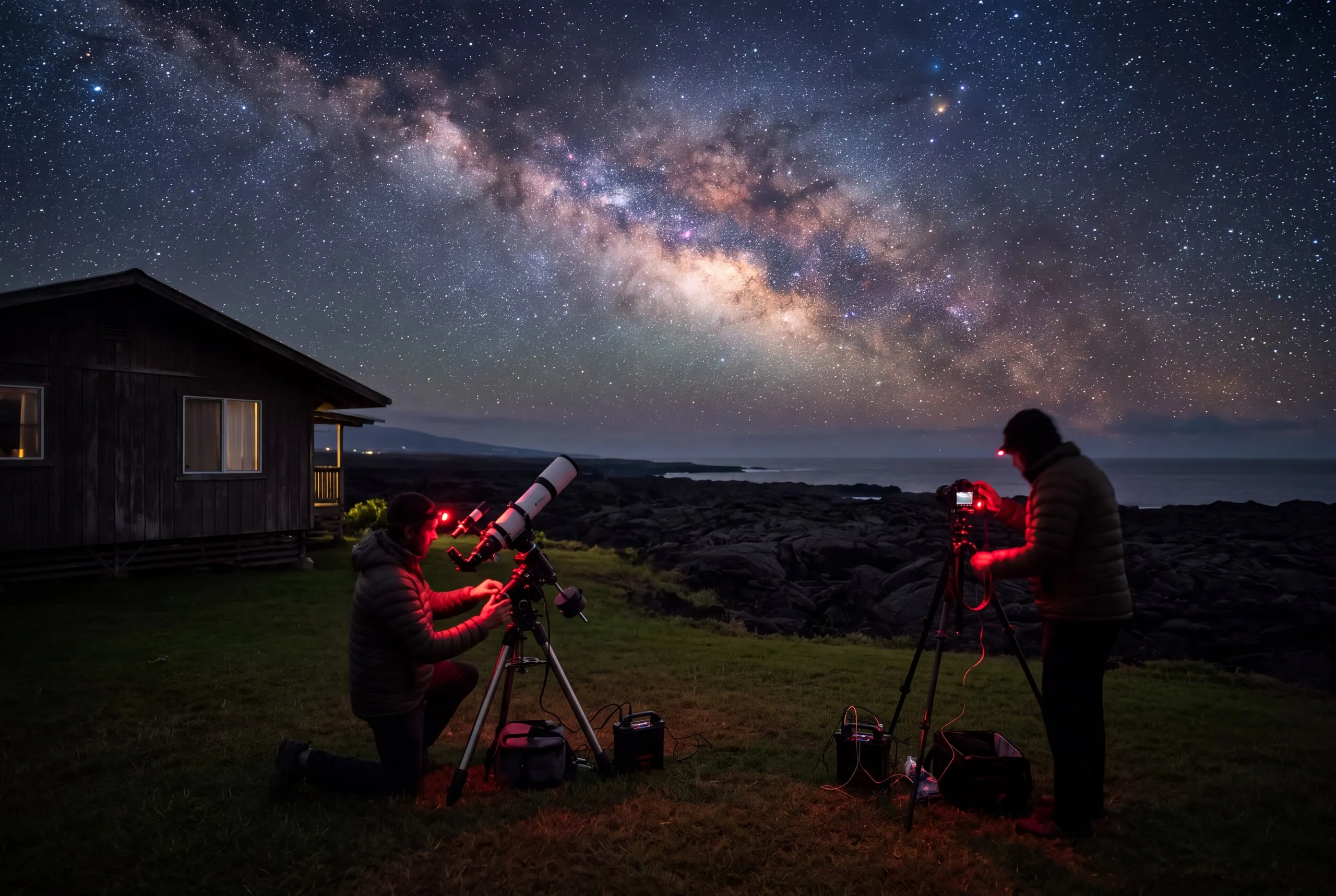
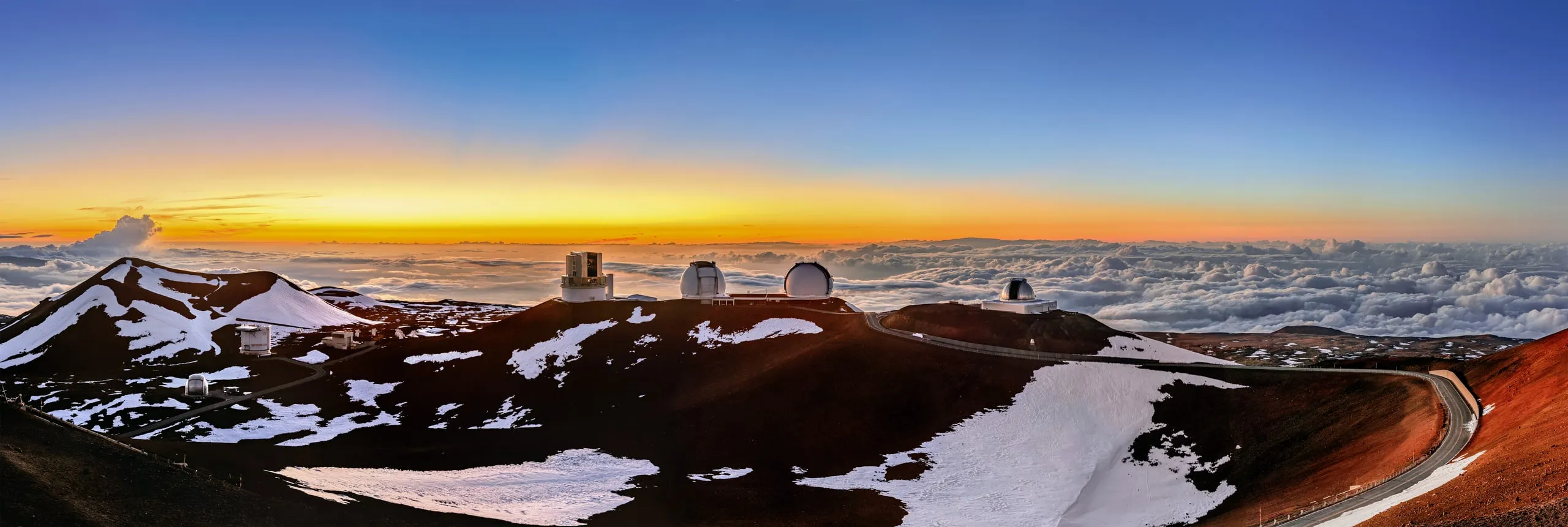
We did not observe from Maunakea itself. The summit is home to professional observatories, it is a sacred place for many Native Hawaiians, and access above the Visitor Information Station is restricted. Our imaging was done from a rented house on the southern side of the island, in the Kaʻū district, far from the lights of Hilo and Kona.
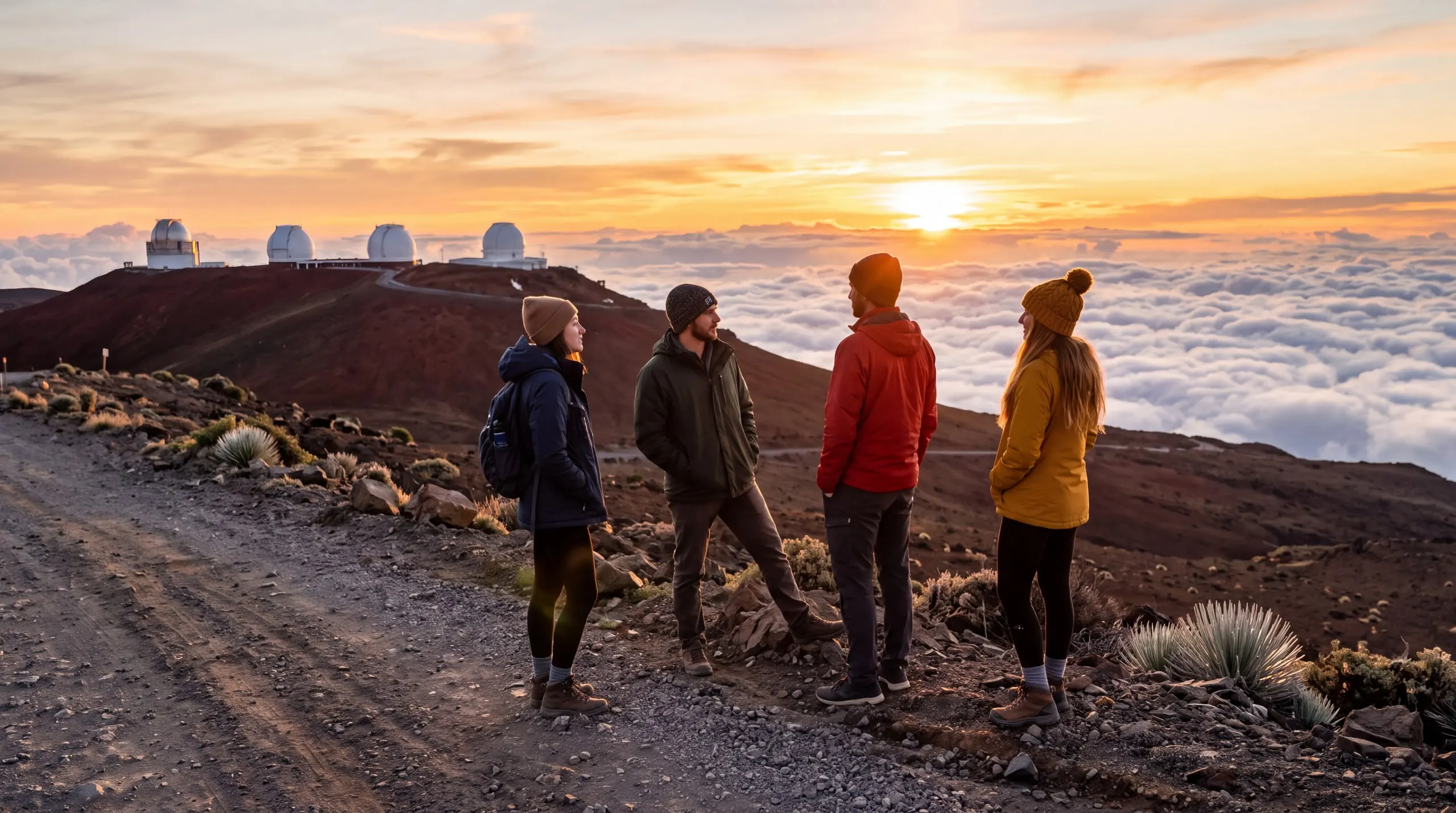
On the evening of March 18 we joined a licensed tour to the summit for sunset. We followed the guidance given to visitors: stay on the road and marked areas, take nothing away, leave nothing behind, and treat the mountain with respect. We are grateful to the guides, who spoke about both the astronomy and the cultural significance of the mountain.
Equipment
- Two small refractors (72 and 80 mm) on tracking mounts
- One cooled astronomy camera and two mirrorless cameras
- A wide-field camera on a tripod for all-sky time-lapses
- Kenta’s portable power station, which ran everything without trouble
Nights
| Night | Conditions | Usable data |
|---|---|---|
| March 17 | Clear after 22:00 | 5.5 hours |
| March 18 | Clear after the summit visit | 4 hours |
| March 19 | Cloud and haze all night | none |
| March 20 | Clear, steady | 7.5 hours |
In total we collected about 17 hours of usable exposures across all cameras, plus calibration frames for each setup.
What we imaged
Targets were chosen so that every member had something to work on afterwards: the Orion Nebula and the Running Man Nebula early in the evening, galaxies in Leo and Virgo around midnight, and Omega Centauri and the region around the Southern Cross low in the south before dawn. The wide-field camera ran every clear night, which gave us a useful set of satellite trails for testing trailmask.
What we learned
- Plan for one bad night in four. We did, and it still felt like a loss.
- Agree on file naming before the trip, not after it.
- Calibration frames taken at the site are worth the extra hour.
- A shared checklist for setting up and packing saved us more than once.
All frames from the trip went through the member image pipeline. They form one of the test sets described in ASRU-TN-2026-002.