Why Spain in August
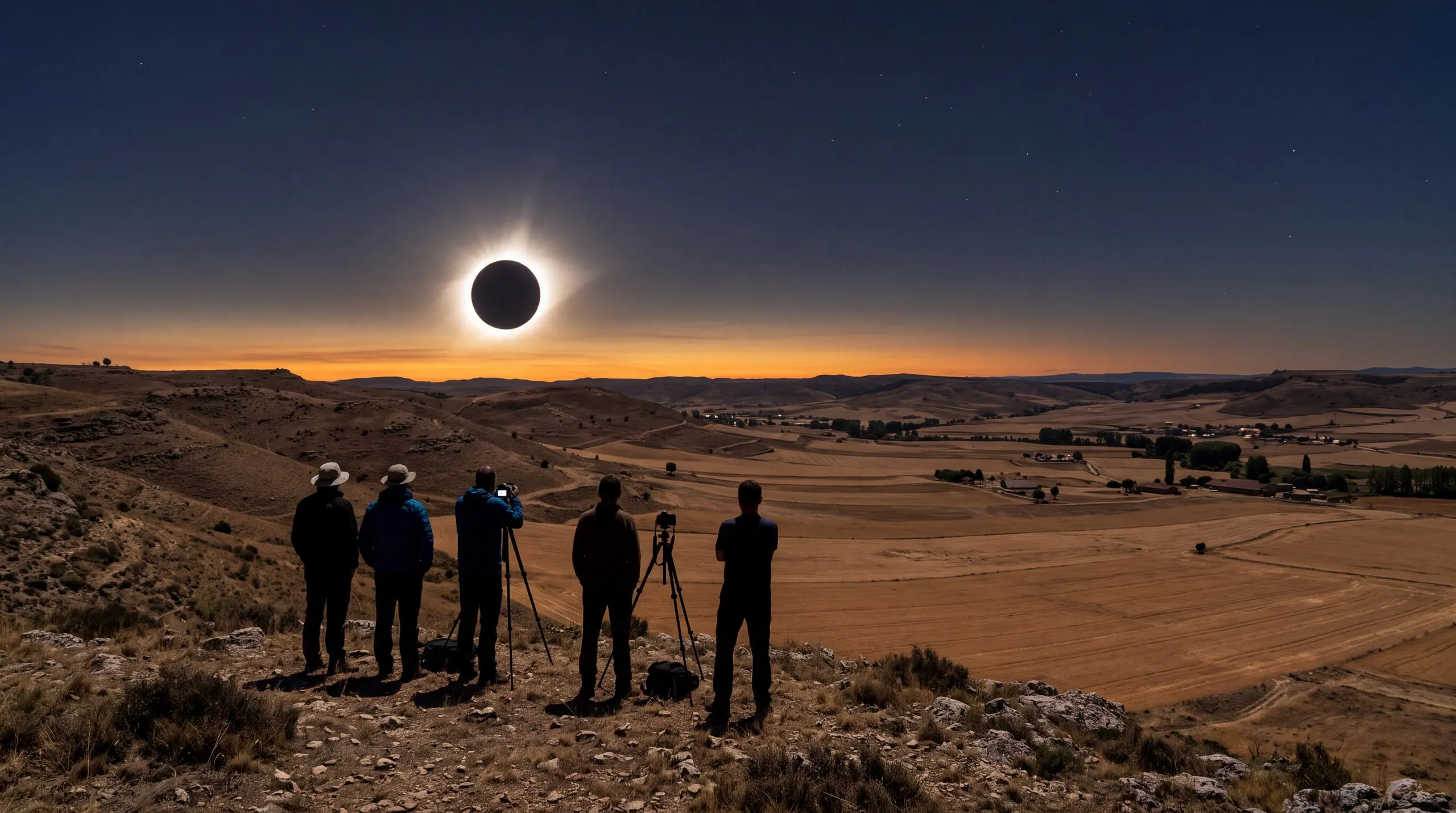
On August 12, 2026, the path of a total solar eclipse crossed northern Spain. It was the first total eclipse visible from the Spanish mainland since 1905. Sirio was spending the summer with his family in Spain, Tomás lives on Tenerife and Mareike could come from Germany by train, so the trip more or less planned itself. Hana and Owen saved up and flew in from Portland. An eclipse is always at new Moon, which also meant a dark sky for the Perseid meteor shower the same night.
Tomás proposed ending the week on La Palma, in the Canary Islands, which has some of the best-protected night skies in the world.
The eclipse
We watched from a hillside a few kilometers outside Soria, at about 1,000 meters above sea level. In Soria the eclipsed Sun was only about seven degrees above the west-northwest horizon, so we spent the day before checking sight lines.
| Event | Local time (CEST) |
|---|---|
| Partial phase begins | about 19:34 |
| Totality begins | about 20:29 |
| Totality ends | about 20:31 |
| Sun sets, still partly eclipsed | about 21:11 |
Totality lasted about one minute and forty seconds. The sky stayed clear. We did not try to do science during totality; we agreed beforehand that everyone would simply look. Two cameras ran unattended to record the sequence.
The Perseids
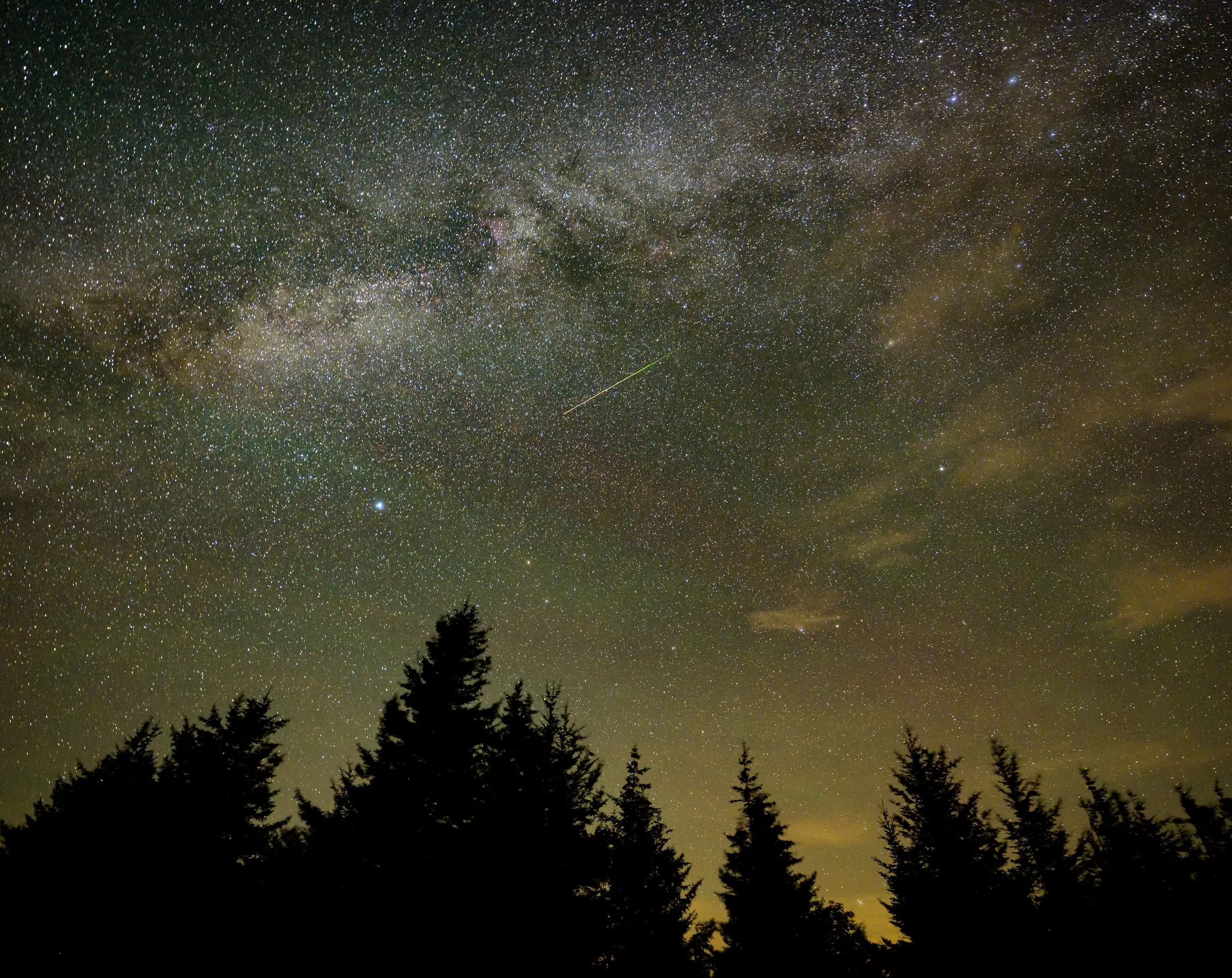
The peak of the Perseid meteor shower fell on the same night, with no Moon. We moved a short distance to a darker spot and counted meteors in shifts until dawn. Our best hour gave 61 meteors among four observers. The all-sky camera recorded the whole night, and those frames are now used to test how well trailmask tells meteors apart from satellites.
La Palma
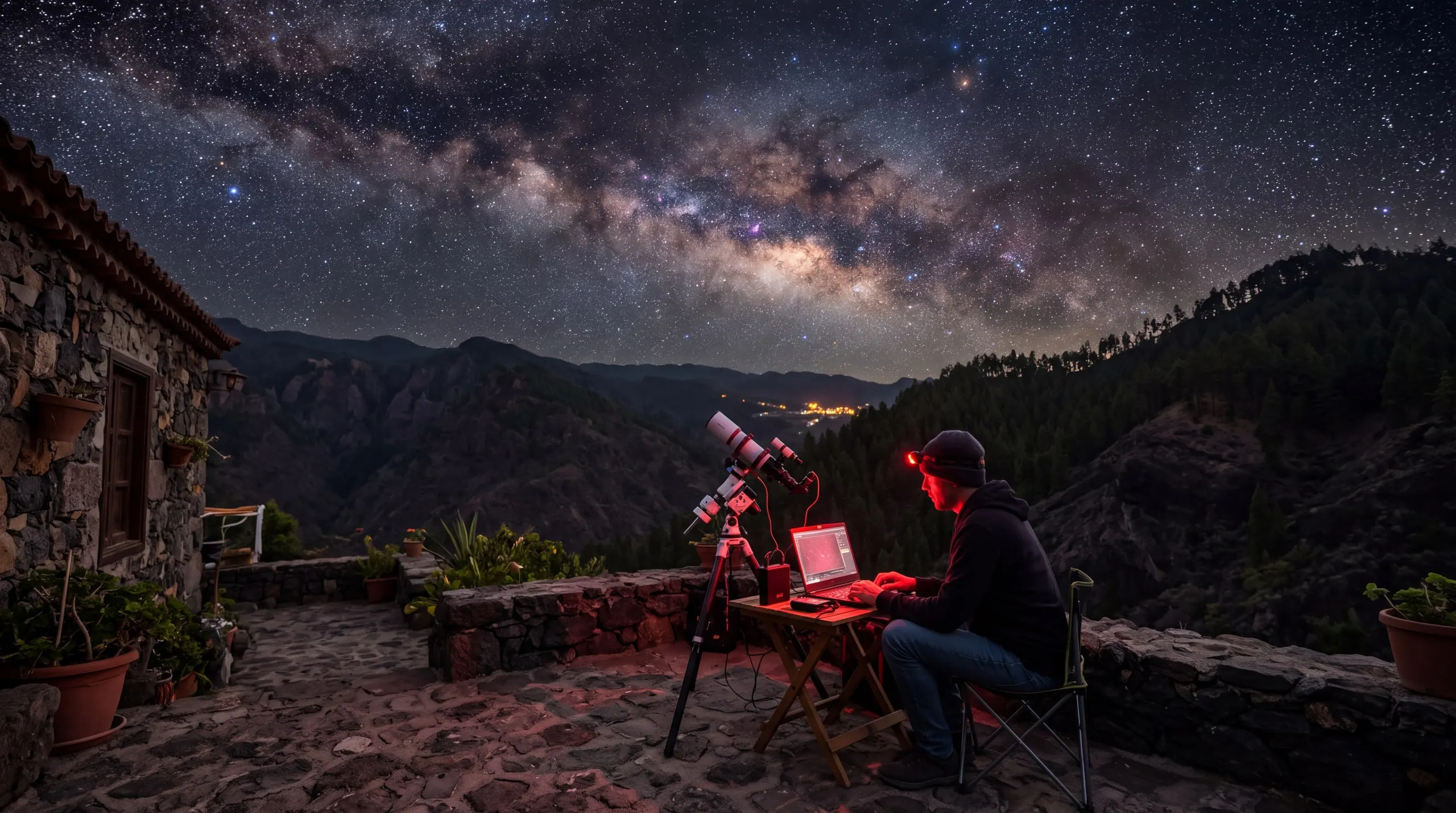
On August 13 we flew to La Palma. The sky above the island is protected by a 1988 law that limits outdoor lighting, and the island was declared a Starlight Reserve in 2012. On our first night the Milky Way cast faint shadows.
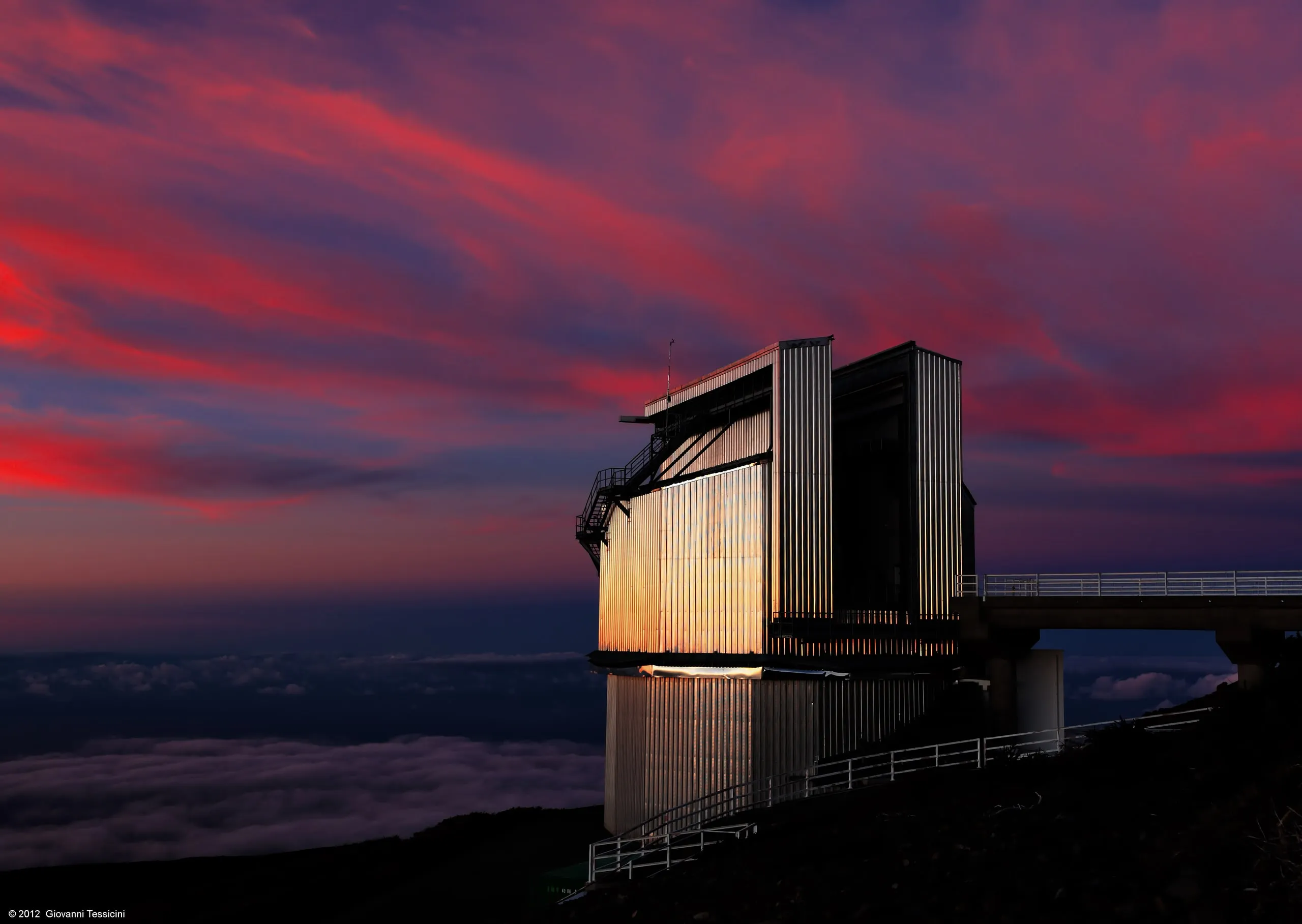
We imaged for four nights from a rural house in the northwest of the island, with a small travel refractor Hana brought from Portland, Mareike’s camera and Tomás’s own setup. On one afternoon we joined a guided tour of the Roque de los Muchachos Observatory, where several international telescopes stand on the rim of the Caldera de Taburiente.
| Night | Conditions | Usable data |
|---|---|---|
| August 13 | Clear | 6 hours |
| August 14 | Clear, some high cloud after 03:00 | 5 hours |
| August 15 | Clear, very steady | 7 hours |
| August 16 | Wind, short session | 2 hours |
What we learned
- For a low eclipse, the horizon matters more than the weather forecast.
- Two people should never be in charge of the same camera.
- Calima, the dust that sometimes blows from the Sahara, was forecast for our last two nights and did not arrive. We were lucky.
Our thanks to Tomás, who organized almost everything, and to the people of Soria and La Palma, who were welcoming throughout.