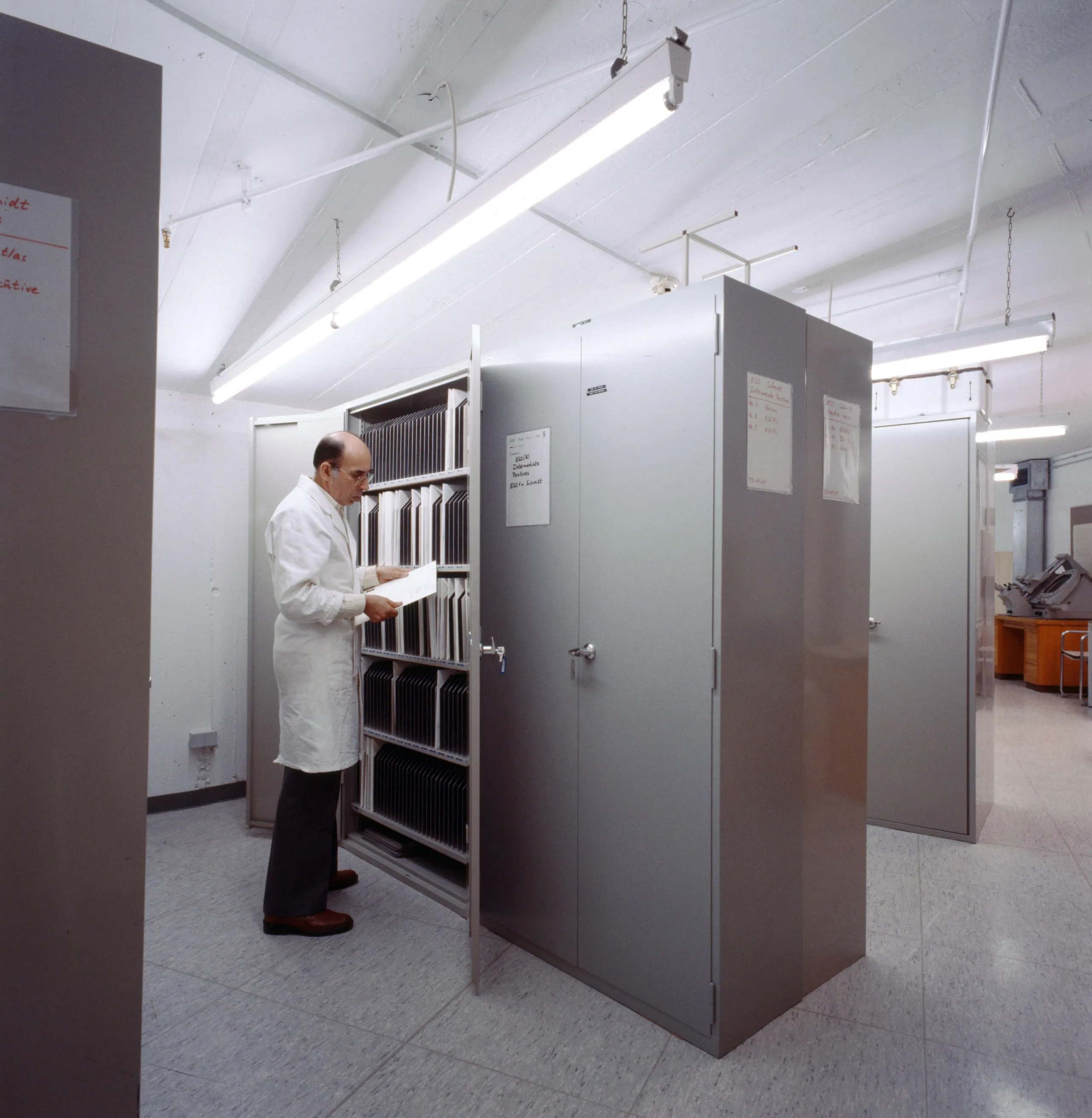

For roughly a century, from the 1880s until digital detectors took over, professional astronomy was recorded on glass. Observatories exposed hundreds of thousands of photographic plates, and people measured them by eye, with loupes and measuring engines.
Harvard College Observatory holds one of the largest of these collections. Its DASCH project (Digital Access to a Sky Century @ Harvard) finished scanning the plates in 2024 and has released the scans and their calibrated catalogs publicly. That release is the starting point for our Plate Archive Project.
What we want to do
Plate scans are not like modern images. Emulsion has grains, bubbles and flaws. Plates collect dust and scratches. Many carry handwritten marks in ink, made by the astronomers who used them. Automated pipelines already handle much of this, but each plate still has detections that are hard to classify.
In the first phase we will:
- Build a labeled set of image cutouts from a sample of DASCH plates, with each detection marked as a star, a defect, or an annotation.
- Train a classifier on that set and measure how often it agrees with human reviewers.
- Publish the labels, the model and a short technical note describing what worked and what did not.
How members can help
Most of the work in phase one is labeling, and it needs no background in astronomy. Each cutout takes a few seconds. Members can sign up for labeling sessions through the working group.
We are grateful to the DASCH team for making the archive public. The DASCH project at Harvard is grateful for partial support from NSF grants AST-0407380, AST-0909073 and AST-1313370.